
The Thrill of Whitewater Rafting
An Exhilarating Add-On to Your Bhutan Journey
When travelers envision Bhutan, images typically arise of ancient monasteries perched on cliffsides, prayer flags fluttering against Himalayan peaks, and spiritual journeys through mountain passes. Yet Bhutan holds another treasure that surprises many visitors: some of the most pristine and exhilarating whitewater rafting in the Himalayas, flowing through landscapes largely untouched by the commercial rafting industry that has transformed rivers elsewhere in surrounding countries.
For those building a guided itinerary through Bhutan, adding a day or afternoon of rafting offers not just adventure but a completely different perspective on this remarkable country. By rafting, one can look out from the heart of its river valleys, where the same glacial waters that power the nation's innovative hydroelectric industry provide thrilling rapids and moments of serene beauty in equal measure.
Waters Born from Snow and Ice
Bhutan's rivers begin high in the Himalayas as glacial melt, giving the water a distinctive crystalline blue color that stands out dramatically against the green valleys. These are not sluggish lowland rivers but dynamic waterways shaped by elevation, snowmelt, and monsoon patterns, creating conditions that shift with the seasons and offer varied experiences throughout the year.
The kingdom boasts numerous rivers ideal for rafting, including the Mo Chhu, Pho Chhu, Paro Chhu, and others. Each carries its own character, from gentle floats suitable for families, to challenging rapids that test experienced rafters.
What makes these rivers extraordinary isn't just their technical offerings but their setting. Rafting in Bhutan means paddling past terraced rice fields where farmers work using methods unchanged for generations, glimpsing dzongs (fortress-monasteries) from angles few visitors ever see, and floating through gorges where the only sounds are rushing water and the occasional call of rare birds found nowhere else on Earth.
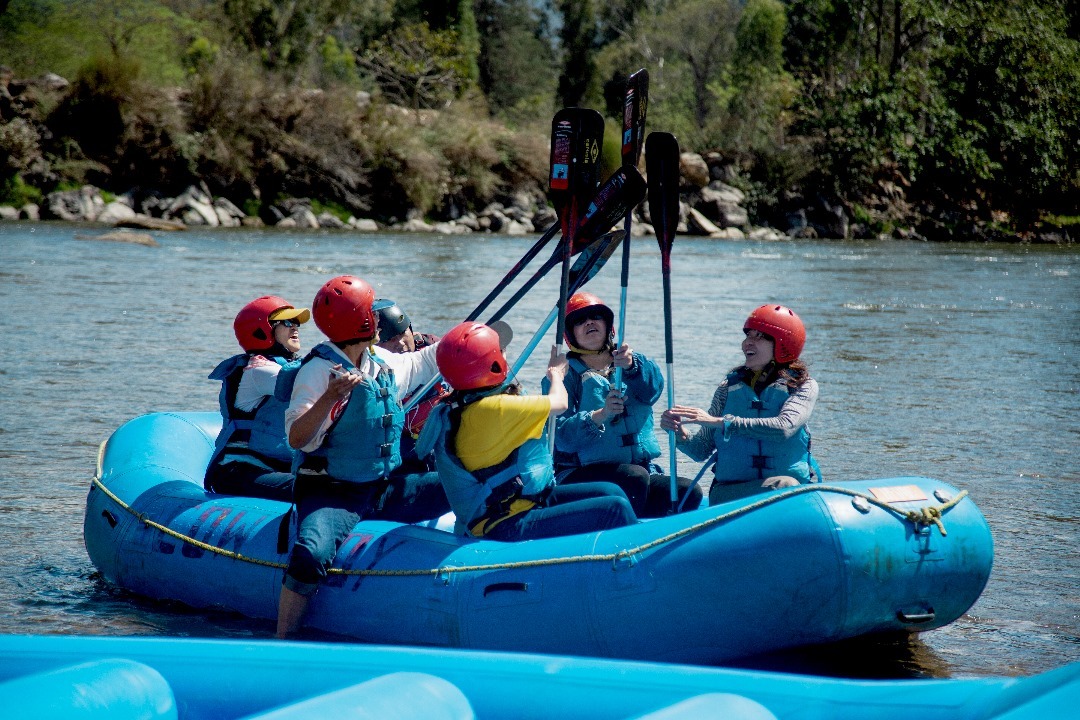
The Crown Jewels: Pho Chhu and Mo Chhu
The most popular rafting destination lies in the fertile Punakha Valley, where two rivers, the Pho Chhu (Father River) and Mo Chhu (Mother River), converge at the magnificent Punakha Dzong before becoming the Puna Tsang Chhu.
Pho Chhu: For the Adventurous Spirit
The Pho Chhu, fed by glaciers in the remote Lunana region, offers approximately 16 kilometers with about 15 rapids ranging from Class II to Class IV. This makes it Bhutan's most exciting rafting experience and the choice for those seeking genuine whitewater thrills.
The journey begins below the bridge at Samdinkha and takes rafters through rapids with evocative names: Horseplay, Strainer Paradise, Pipeline, and the challenging Wrathful (or Laughing) Buddha rapid located just beside the Punakha Dzong. The combination of technical rapids, stunning scenery, and the dramatic finale of paddling past one of Bhutan's most important historical sites creates an unforgettable experience.
The run typically takes 2-3 hours, with the level of challenge varying by season. During peak snowmelt in spring and after monsoon rains, the Pho Chhu becomes more demanding, with bigger waves and faster currents that experienced rafters find exhilarating.
Mo Chhu: Perfect for First-Timers and Families
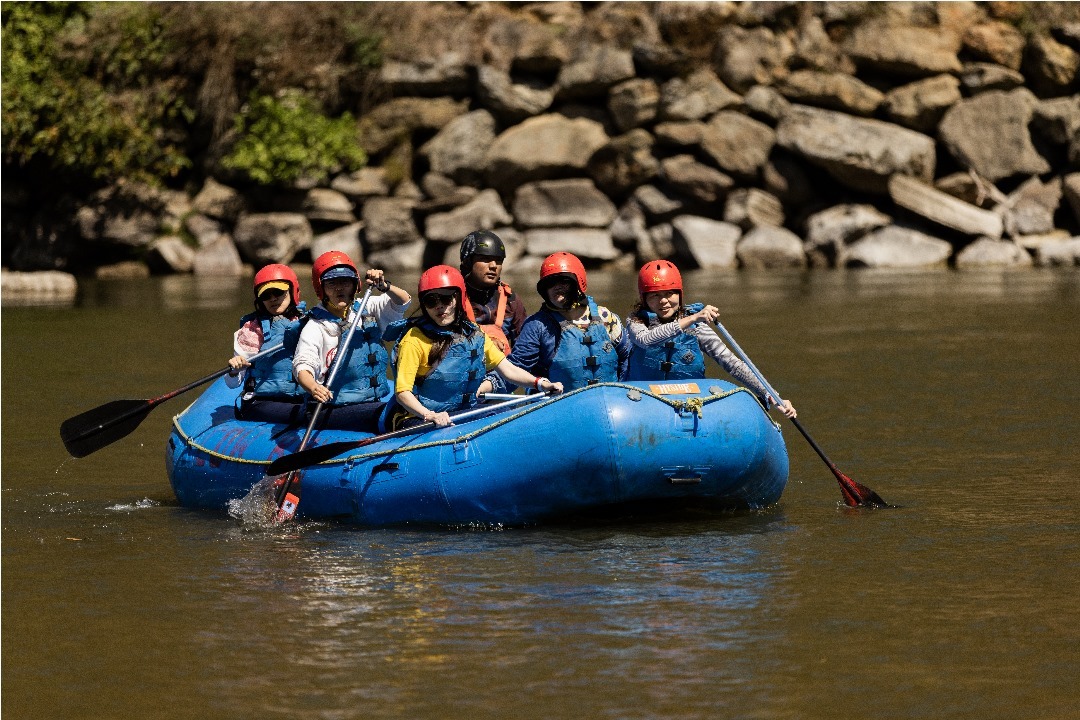
The Mo Chhu originates in the northern hills of Laya and Lingzhi and offers a calmer experience. Its 10-kilometer course contains approximately 10 rapids, all rated Class I-II+, making it ideal for those new to rafting, families with children (typically ages 5 and above), or anyone seeking a more relaxed river journey.
The highlight of the Mo Chhu trip is paddling directly past the Punakha Dzong, the 17th-century fortress that served as Bhutan's capital and remains the winter residence of the Je Khenpo (Bhutan's chief spiritual leader). Viewing this architectural masterpiece from the river offers a unique perspective, seeing it as it was designed to appear as a ship ready to sail, at the confluence of the two rivers.
Before starting the river journey, travelers may choose to include a 30-minute hike through rice paddies to the Khansum Yulley Namgyal Chorten, a beautiful three-story stupa. This blends cultural immersion with adventure perfectly, a quintessentially Bhutanese experience.
Beyond Punakha: Other Rafting Adventures
For those venturing to the southern region near Royal Manas National Park, the Drangme Chhu and Mo Chhu rivers in Pangbang offer exciting options. The rides here are described as bumpy and fast, with breathtaking views of the national park on one side and typical local settlements on the other.
The Mangde Chhu offers both half-day experiences with Class 3+ rapids and full-day adventures through remote jungle, with spectacular gorges and the unique sight of twin waterfalls near the start. These southern routes see even fewer tourists than Punakha and provide an authentic wilderness experience.
The Hydropower Connection: Harnessing "White Gold"
As rafters paddle down these pristine rivers, they're traveling the same waterways that form the foundation of one of the world's most innovative clean energy stories. Bhutan has transformed its abundant water resources into hydroelectric power that now shapes the nation's economy and exemplifies sustainable development.
Bhutan possesses enormous hydropower potential, estimated at over 30,000 MW from more than 150 sites nationwide. Hydropower constitutes around 20% of Bhutan's economy, with taxes and dividends from hydropower companies making up over 40% of national revenue: the largest single source.
The history of hydroelectric power in Bhutan began with the landmark 336-megawatt Chukha Hydropower Station, which came online in 1986. This pioneering project demonstrated how Bhutan could harness its steep mountains, deep gorges, and fast-flowing rivers — the same features that create exciting rapids — to generate clean, renewable energy.
Today, the vast majority of Bhutan's installed electric power comes from hydropower plants and most Bhutan households have electricity. Approximately 70% of the hydroelectric power Bhutan produces is exported to India, saving an estimated 4.4 million tons of CO2 emissions annually.
What makes this relevant to the rafter? It demonstrates Bhutan's commitment to balancing development with preservation. The same philosophy that keeps visitor numbers limited to protect culture and environment guides hydropower development. Projects are carefully assessed for environmental and social impact. The "run-of-river" design used for most plants means rivers continue flowing naturally without massive dams that would eliminate rafting opportunities.
When paddling these rivers, rafters are experiencing waters that represent Bhutan's future: a clean energy economy that allows the nation to remain carbon-negative (one of only two countries globally to achieve this status) while providing prosperity for its people. The rivers serve multiple purposes: spiritual significance to local communities, economic engine through hydropower, and recreational opportunity for visitors. It is a true example of sustainable resource management.
Planning Your River Adventure
Best Seasons
The prime rafting season runs from March through May and again from October through November, when weather is favorable and water levels are optimal. Spring brings higher water from snowmelt, creating bigger waves and faster currents—ideal for experienced rafters seeking excitement on the Pho Chhu.
Autumn offers slightly calmer conditions with exceptional visibility and comfortable temperatures. The monsoon season (June-September) sees fewer rafters, though some routes remain viable for those who don't mind paddling in rain. Winter months bring cold temperatures but crystal-clear skies and the quietest rivers.
Safety and Requirements
Rafting in Bhutan prioritizes safety without sacrificing excitement. All trips include:
- Professional, experienced river guides trained in swift-water rescue
- Quality safety equipment including helmets, life jackets, and appropriate gear
- Comprehensive safety briefings before launching
- Support systems including first aid and emergency communication
The Mo Chhu is widely preferred for first-timers, children, and elderly people due to its gentler nature. The Tourism Council of Bhutan restricts entry to the more challenging Pho Chhu for young children and seniors, especially during monsoon when conditions intensify.
No previous rafting experience is required for the Mo Chhu. For the Pho Chhu, a basic comfort with water and willingness to follow guide instructions suffices—the guides handle navigation while rafters provide paddling power and hang on during the exciting sections.
What to Expect
Most rafting trips operate as half-day activities, typically 1.5 to 3 hours on the water depending on the route and river conditions. This makes them perfect additions to broader Bhutan itineraries without consuming entire days.
A typical experience includes:
- Morning pickup from your hotel in Punakha or Paro
- Drive to the put-in point (or scenic hike for Mo Chhu trips)
- Safety briefing and gear fitting
- 1.5-3 hours on the river with breaks for photos (seasonal)
- Return to your hotel
Come prepared to get wet: splashing from rapids and waves is part of the fun. Wear quick-drying clothes or swimwear, secure footwear (river sandals or old sneakers), and bring waterproof protection for any cameras or phones.
Cultural Connections
Many rafting experiences include cultural elements that make them uniquely Bhutanese. The hike through rice paddies to Mo Chhu starting points offers intimate glimpses of rural life. The view of Punakha Dzong from river level provides perspective impossible from roads. Some operators include visits to nearby temples or traditional lunch preparations on riverside beaches.
Rafters might spot the white-bellied heron in its natural habitat—one of the world's rarest birds—or kingfishers frolicking on riverbanks, adding wildlife viewing to the adventure.
Fitting Rafting into Your Itinerary
One of rafting's advantages is its flexibility. A half-day on the river integrates seamlessly into most Bhutan itineraries, particularly those including time in Punakha Valley, already a highlight for its stunning dzong, suspension bridges, and the nearby Chimi Lhakhang (the fertility temple dedicated to the Divine Madman).
Consider these combinations:
Active Adventure Itinerary: Pair rafting with trekking to Tiger's Nest, mountain biking through valleys, or archery experiences for an activity-rich journey.
Cultural Immersion with Adventure: Balance days visiting monasteries and attending festivals with river rafting and day hikes—experiencing Bhutan's spiritual and natural sides equally.
Family Journey: The gentle Mo Chhu provides adventure suitable for children while parents enjoy Bhutan's cultural sites. Many families find the shared river experience creates lasting memories.
Honeymoon or Romantic Getaway: Morning rafting followed by afternoon visits to temples and evening at luxury accommodations offers the perfect blend of excitement and relaxation.
Your licensed guide and tour operator can easily incorporate rafting into any itinerary. Simply express interest during planning, and they'll arrange logistics, safety equipment, and scheduling around your broader journey.
A Different Perspective on the Kingdom
There's something transformative about experiencing a place from its rivers. The pace slows. Details emerge that rushing past in vehicles would miss. The same mountains and valleys take on different character when viewed from water level, with the river's perspective revealing relationships between landscape, architecture, and human settlement that aren't obvious from roads.
Rafting through Bhutan offers this gift—a chance to see this remarkable kingdom from an angle few visitors experience. The combination of pristine waters born from Himalayan snowfields, challenging rapids that thrill without overwhelming, cultural landmarks viewed from unexpected vantage points, and the knowledge that these same rivers represent Bhutan's innovative approach to sustainable development creates an experience that resonates on multiple levels.
For the adventure seeker looking to complement temple visits with adrenaline, for families wanting to share an outdoor experience together, or for anyone curious to see Bhutan from a completely different perspective—the kingdom's rivers offer a welcome addition to any guided journey.
The waters flow as they have for millennia, now serving spiritual, economic, and recreational purposes in harmony. This is Bhutan's genius: finding ways to embrace modernity and welcome visitors while preserving what makes it special. Nowhere is this balance more evident than on the rivers, where ancient waters meet contemporary adventure, and travelers discover yet another dimension of this extraordinary kingdom.
All rafting experiences in Bhutan must be arranged through licensed tour operators as part of your guided itinerary. Your guide can coordinate logistics, safety arrangements, and scheduling. Most multi-day tours can easily incorporate a half-day rafting excursion in Punakha Valley or other river destinations. Contact us with any questions.